By Bilge | Reading time: 11 minutes
You love the curves of Arabic letters, but when you search for Islamic calligraphy art, you meet a wall of names: Thuluth, Diwani, Nastaliq, Kufic. Which is which? Where do you even start if you cannot read Arabic? I know that feeling.
I started learning Arabic calligraphy in 2024, and I am still a student. In this article, I share what I have learned so far, 6 beautiful styles, and two simple ways to begin.
- 1. My Journey Into an Art Form That Teaches Patience
- 2. The Geometry Behind the Letters
- 3. What Is Arabic Calligraphy, and Why Is It So Important?
- 4. The Turkish Connection
- 5. 6 Beautiful Islamic Calligraphy Styles
- 6. Patterns, Wall Art, and Modern Looks
- 7. How to Read Arabic Calligraphy
- 8. How to write your name in Arabic calligraphy
- 9. Two Ways to Start: Classic or Modern?
- 10. Part 1: Classic Arabic Calligraphy With Qalam, Ink, and Special Paper
- 11. Part 2: Modern Islamic Calligraphy Art
- 12. Free Ways to Learn and 3 Free Templates
- 13. What Thuluth Teaches Me
- 14. Your Questions Answered – Q&A
- 15. Why I Started This Blog
- 16. Final Thoughts: One Letter at a Time
1. My Journey Into an Art Form That Teaches Patience
Arabic letters are a feast for both my eyes and my soul. I often think about the wisdom behind Allah choosing Arabic as the language of His revelation.
And this fascination goes far beyond the Muslim community: you find Arabic letters in jewellery, fashion, tattoos, and modern design all over the world.
Perhaps there is something profound in that. Allah ﷻ chose the very letters through which He revealed His message, and those same letters captivate the human eye with their beauty.
How great is our Creator – the One who not only created our eyes, but also the very things that inspire them..
You don’t have to understand Arabic to fall in love with the beauty of its letters.
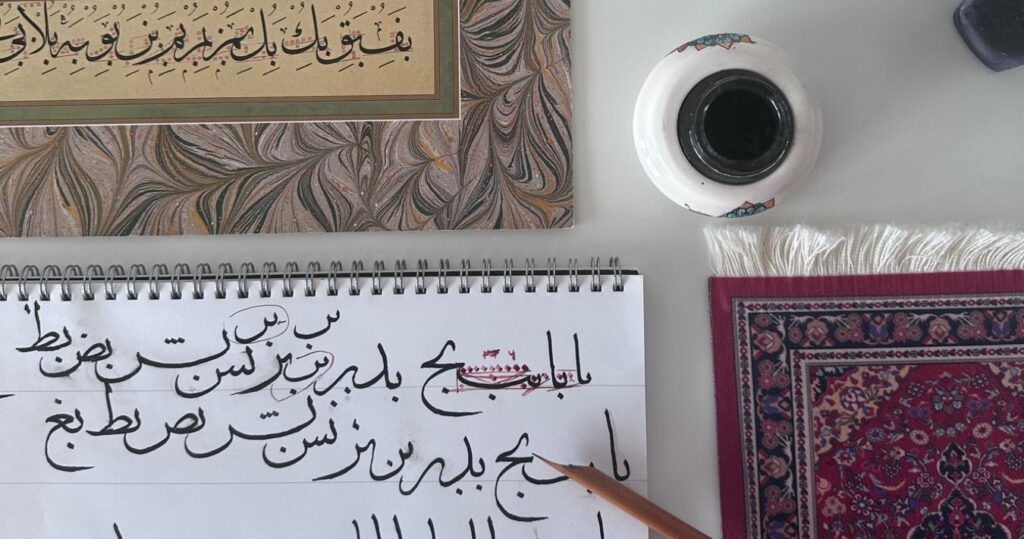
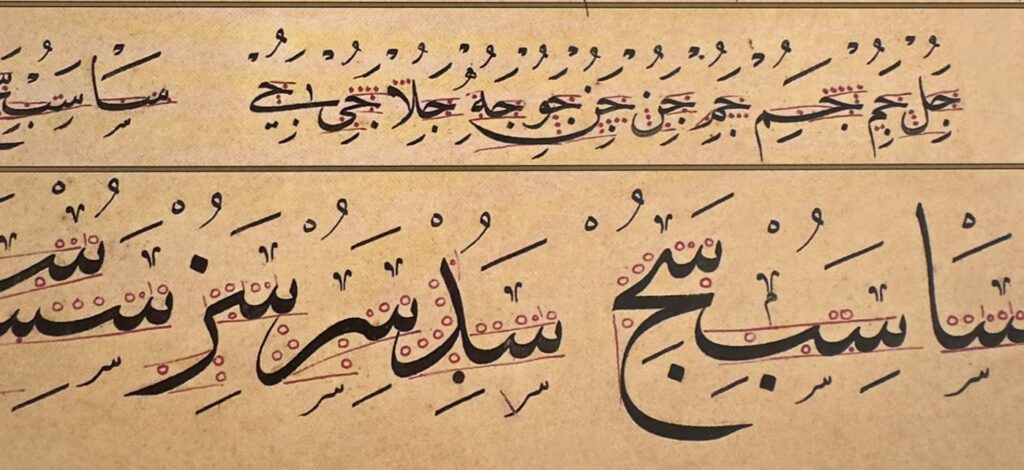
I currently study Thuluth with a calligraphy teacher, using the traditional Meşk method and the exercise book of Şevki Efendi. And I have to admit: it was much harder than I imagined. Arabic is not my mother tongue, and even single letters felt difficult at the beginning. When I look at my first exercises, I almost want to look away! But when I compare them with my recent practice, I can see my progress, and that makes me happy.
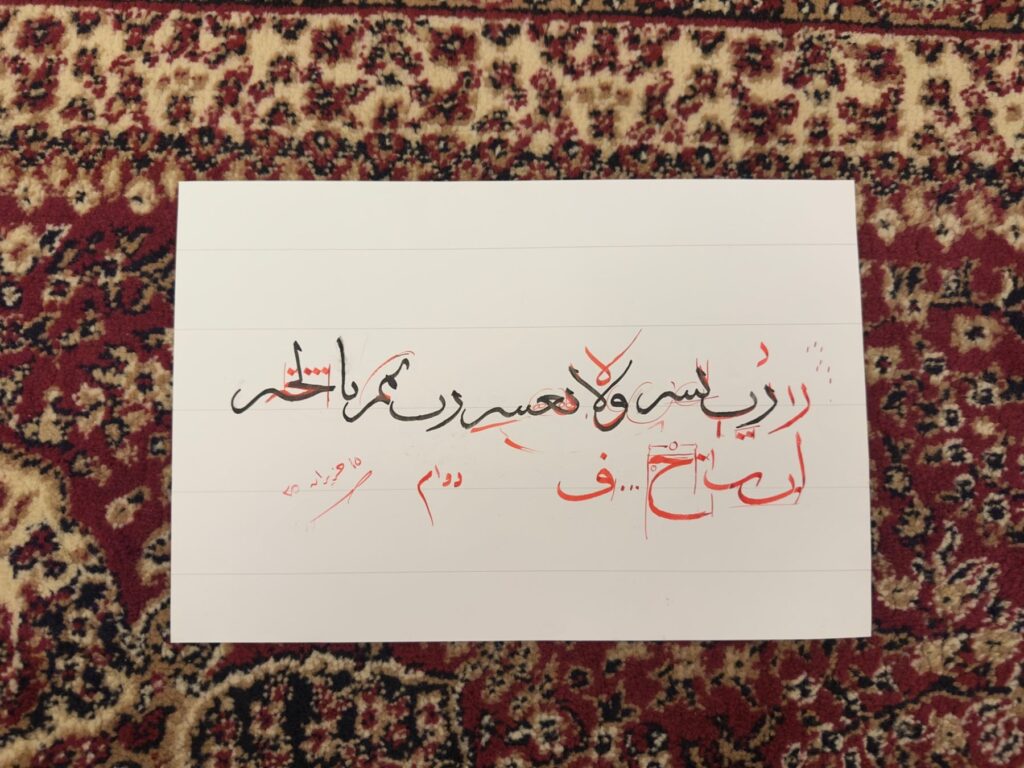
If calligraphy has taught me one thing, it is patience. The angle of the pen, the proportions, the smallest curves: everything matters. You repeat, make mistakes, get corrections, and start over. You never reach perfect. Not everything in life happens quickly, and sometimes you simply have to trust the process.
2. The Geometry Behind the Letters
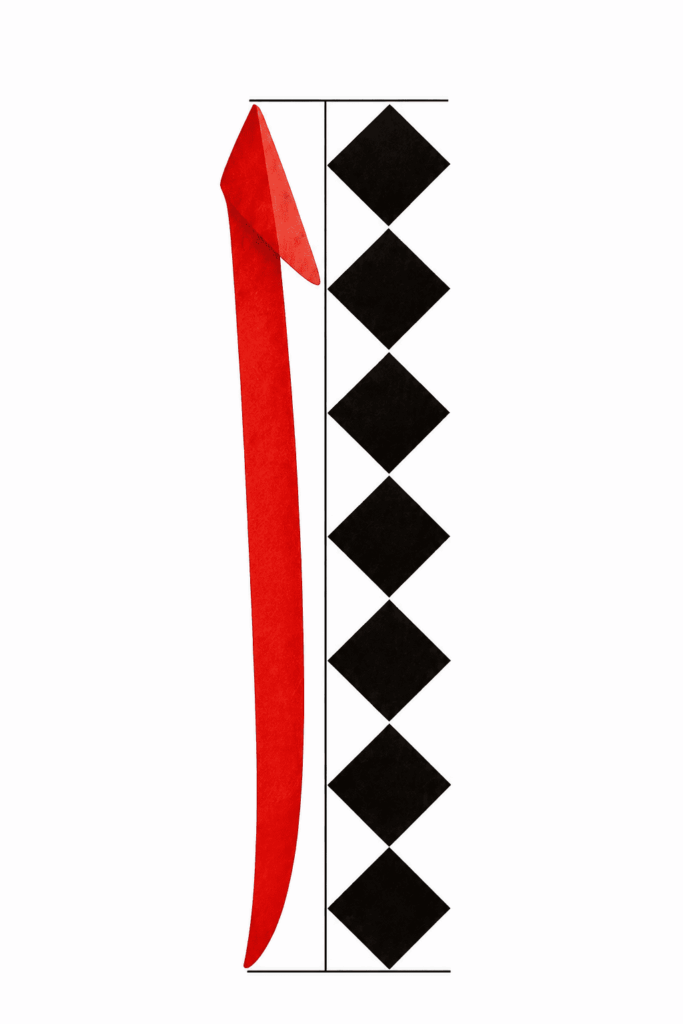
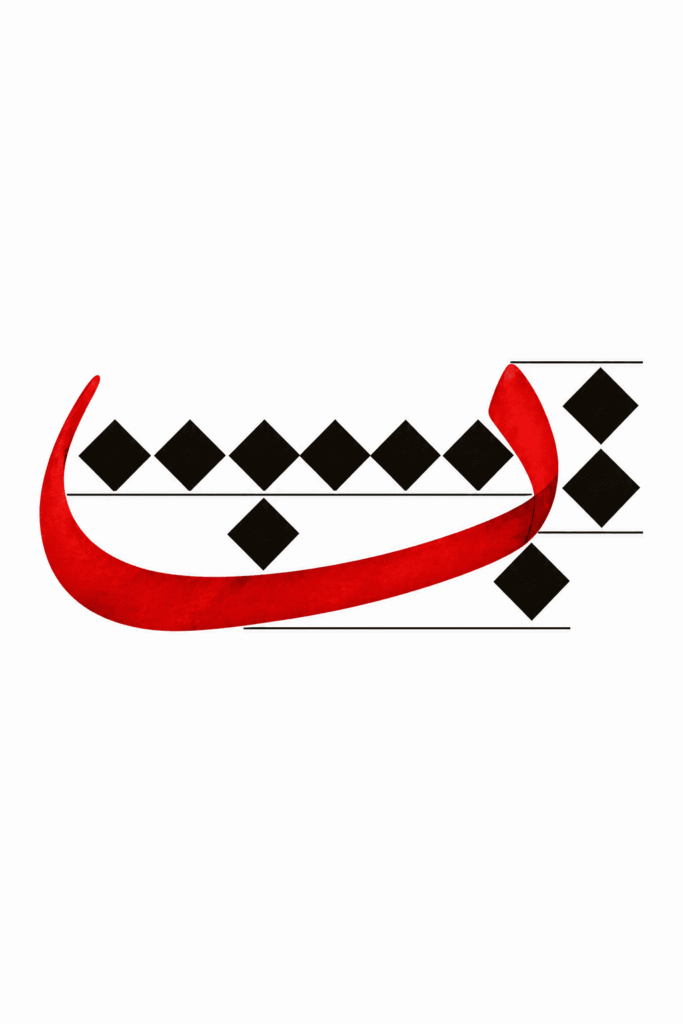
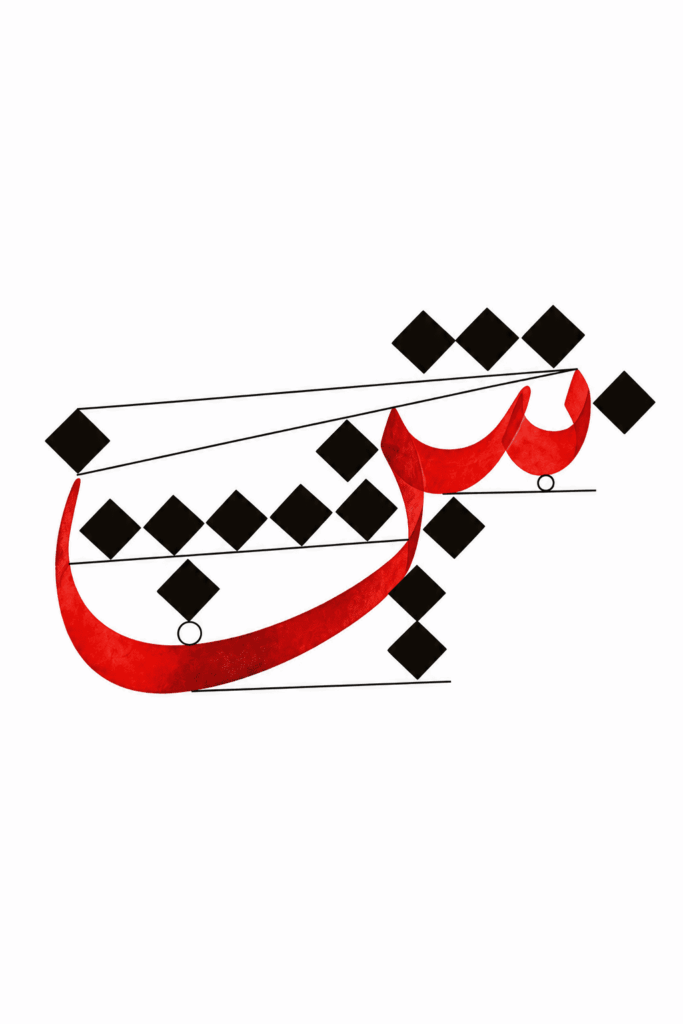
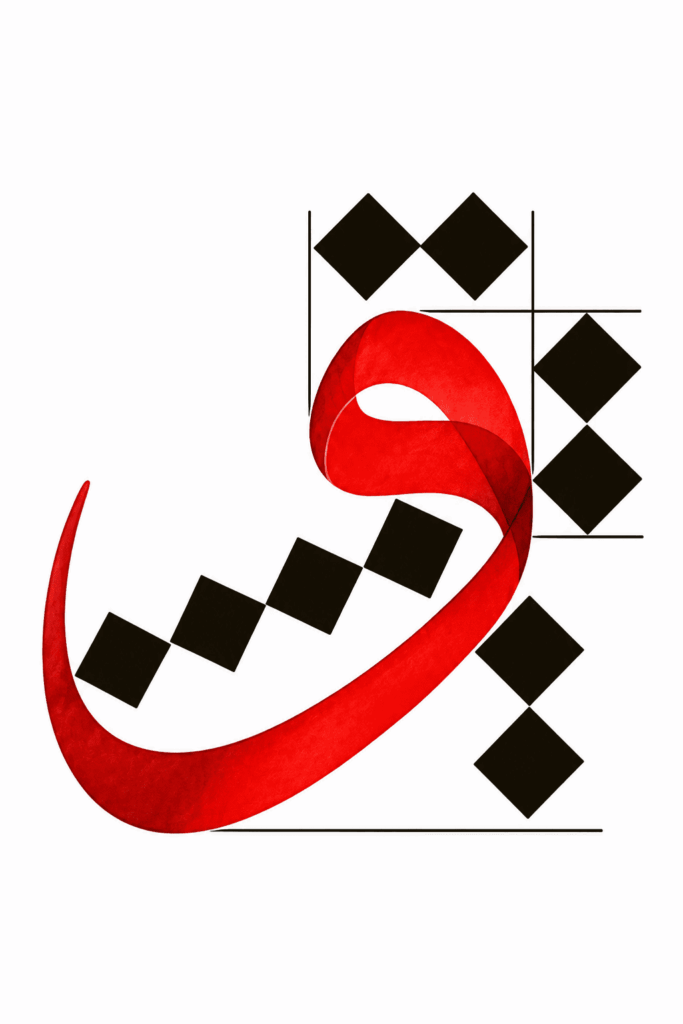
Traditional calligraphy is built on a system of proportion. The letters are not just drawn, they are measured. This system was developed by the Abbasid calligrapher Ibn Muqla.
The Nuqta (نقطة)
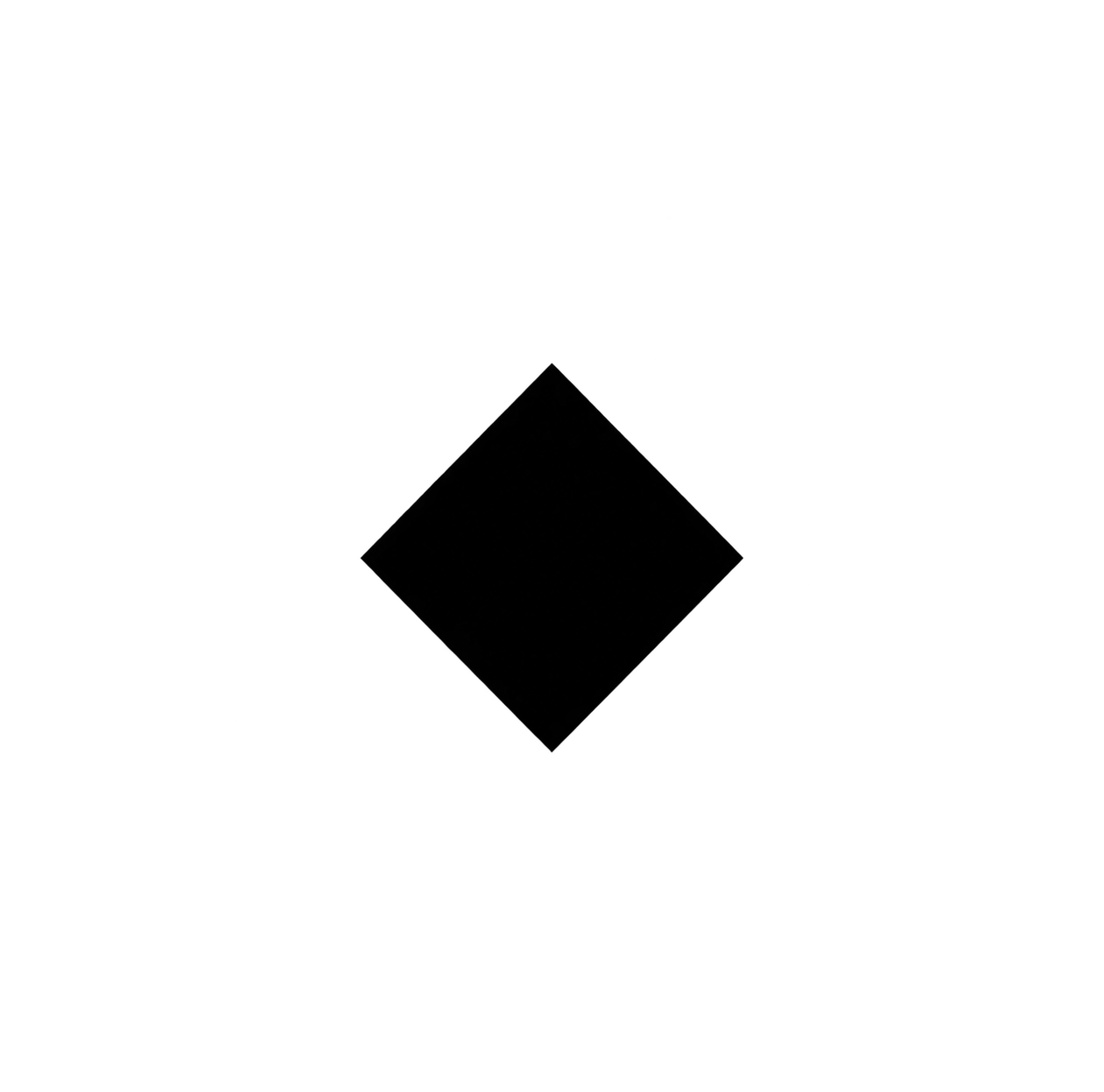
A diamond-shaped dot, formed by pressing the Qalam onto the paper. It is the unit of measurement for the height, width, and proportions of letters.
The Alif (ا)
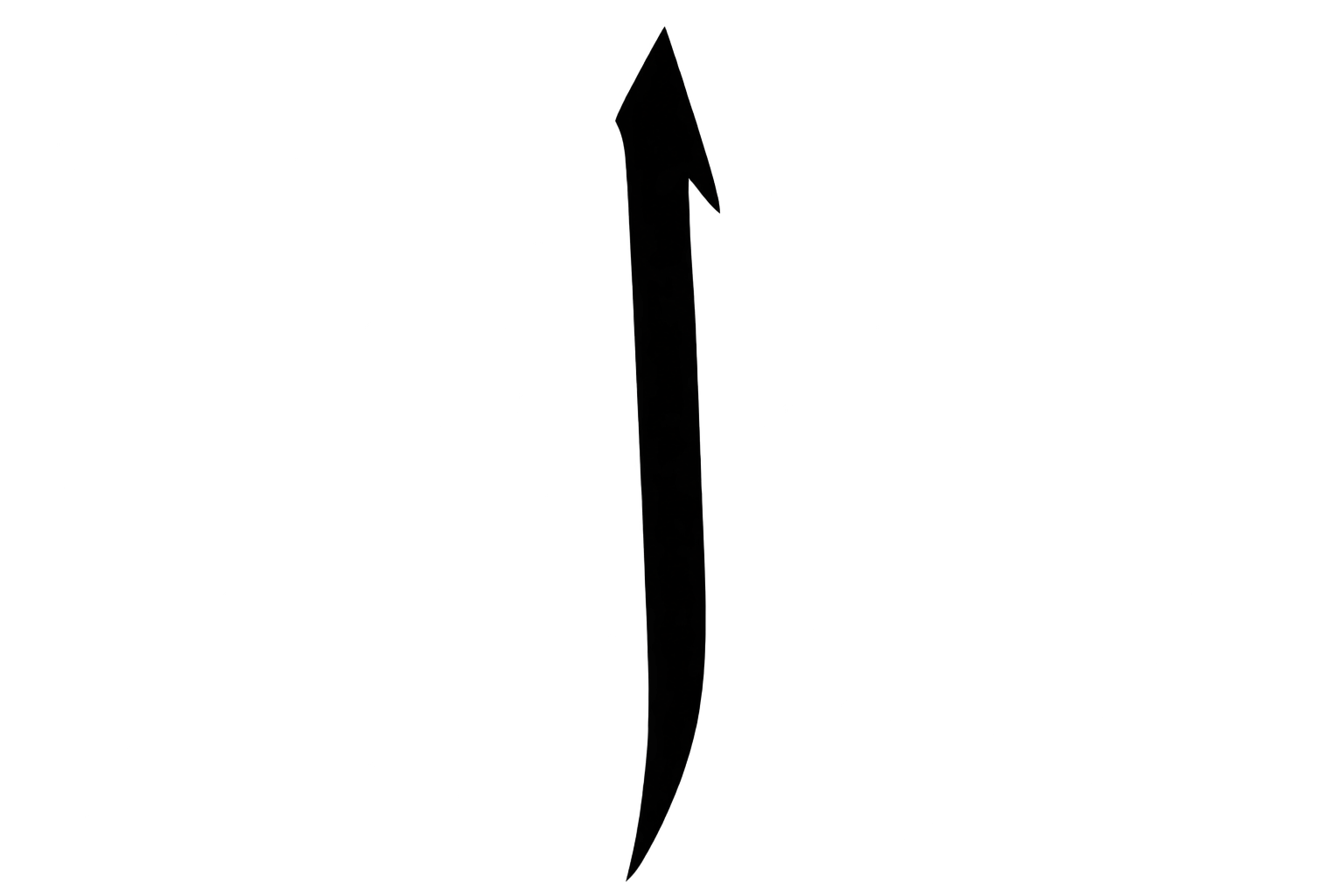
A simple vertical line and the reference for the structure of many other letters.
And here’s the clever part: The dots are actually a ruler. Calligraphers count them to check their letters, like graph paper drawn with the pen itself.
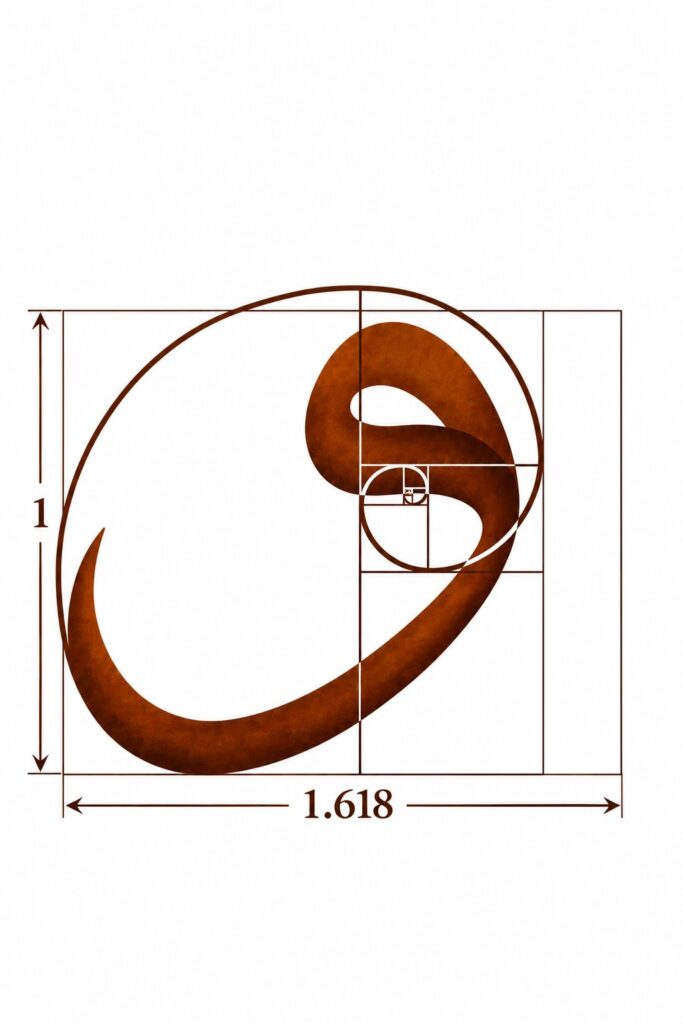
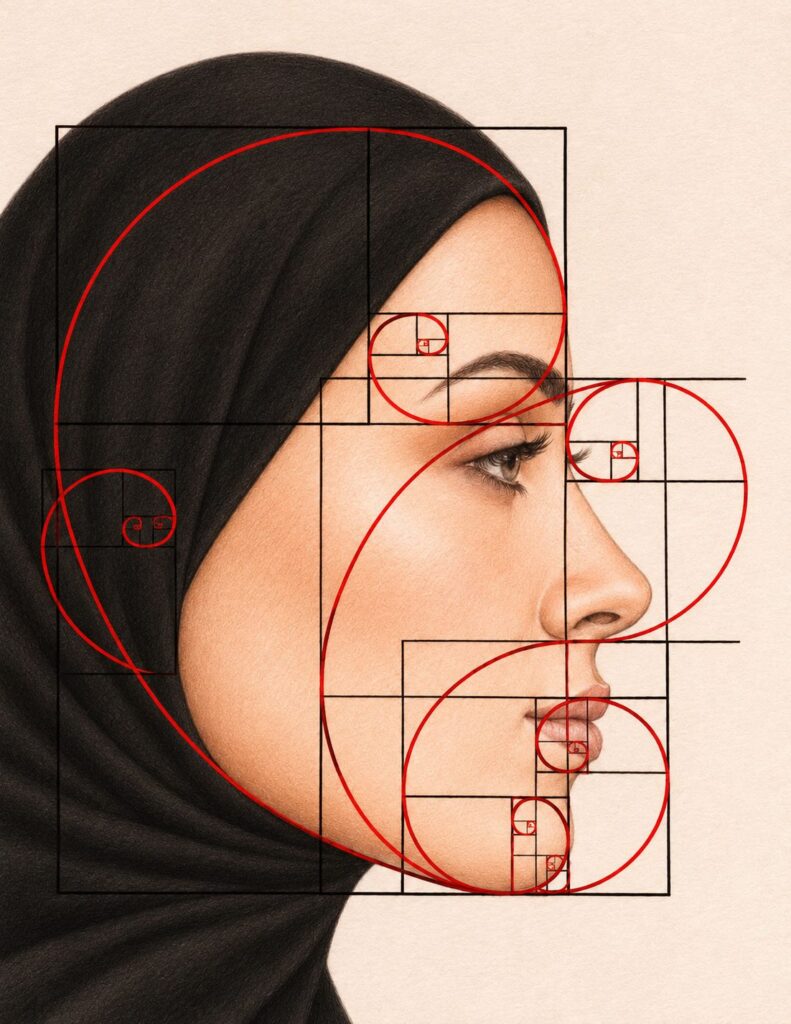
Wait, what? Nature loves proportion too. The Golden Ratio (about 1.618) and the Fibonacci sequence are often linked to sunflower seeds, pinecones, and shells. Arabic letters are not generally built on Fibonacci, so I will not claim that. But both topics invite us to explore geometry, balance, and harmony.
A LITTLE MATHEMATICS: The Golden Ratio 📐
Approximately 1.618 – A mathematical proportion found in geometry and associated with patterns in nature, art and design. Also known as Phi (φ). It is often associated with proportion, balance and visual harmony.
3. What Is Arabic Calligraphy, and Why Is It So Important?
Arabic calligraphy, also called Islamic calligraphy, is the art of beautiful writing in Arabic script. You find it in mosques, manuscripts, tiles, ceramics, and architecture. It is not just pretty handwriting: it follows rules for proportion, rhythm, and pen angle.
Why is calligraphy so important in Islamic art?
- The Arabic language is tied to the Quran. Writing the words beautifully became a way to honor them.
- Religious spaces traditionally focus on patterns, geometry, and writing. Lettering became a main way to decorate mosques and books.
- Letters are flexible. They can be stretched, stacked, and curved, which gives artists endless room to play.
Passed From Teacher to Student
Calligraphy was never just learned from a book. It was handed down from teacher to student, generation after generation. According to tradition, many lineages trace their chain of teachers back to Hz. Ali. In the Meşk method, students copy their teacher’s examples again and again, studying shapes, proportions, and connections.
The Ijazah (إجازة)
In Islamic Calligraphy tradition, an advanced student receives an Ijazah: an authorisation from a qualified teacher to practise and pass on a calligraphic tradition.
4. The Turkish Connection
Istanbul was one of the great centers of calligraphy, and the Ottoman tradition shaped many styles we love today. In Turkish, calligraphy is hat sanatı. When I lived in Istanbul, I stood under the huge round calligraphy panels in Hagia Sophia, roughly 7 meters wide, with my mouth open.
Crazy fact: Thuluth means “one third”. It is often explained as a reference to its proportions. My favorite script has a name that is basically a math fraction. No wonder it keeps me humble.
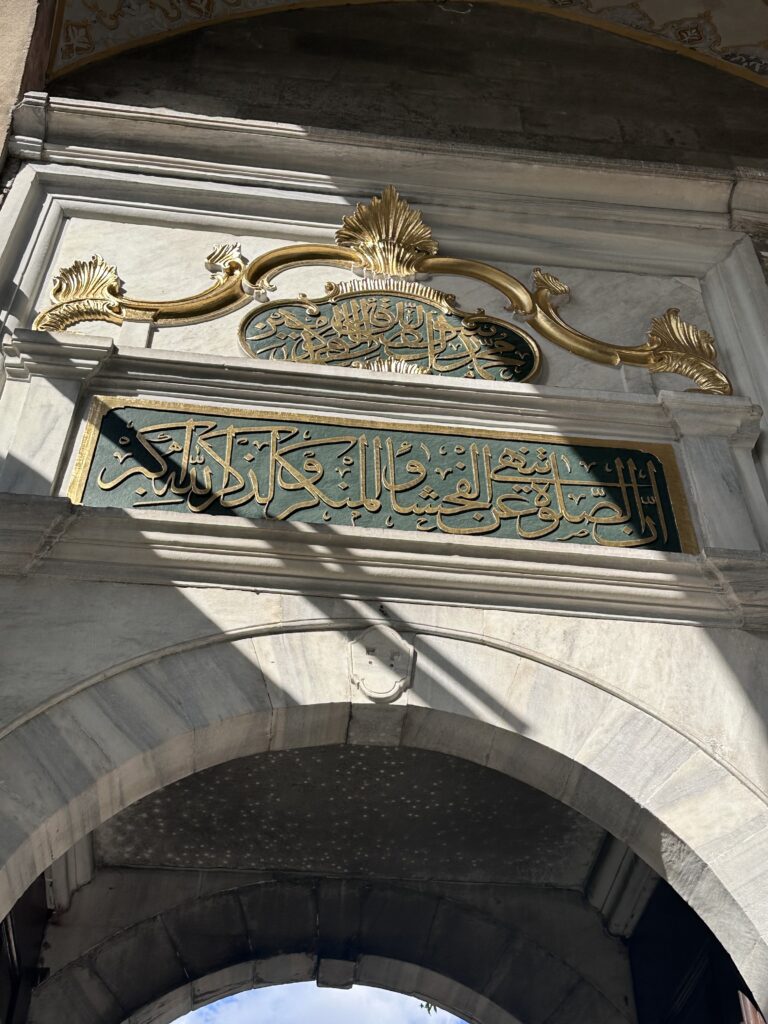
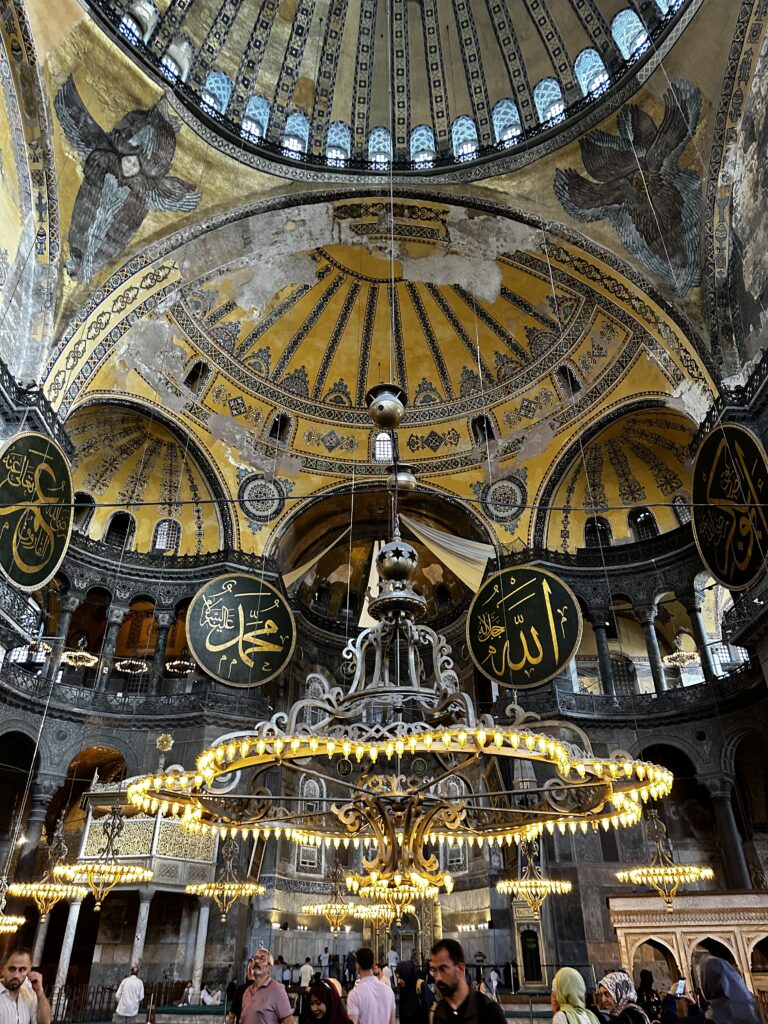
ﷺ Panels, Hagia Sophia5. 6 Beautiful Islamic Calligraphy Styles
Arabic calligraphy has developed into many styles over the centuries. Here are 6 important ones worth discovering, each with a quick level check for beginners.
1. Thuluth (ثلث)
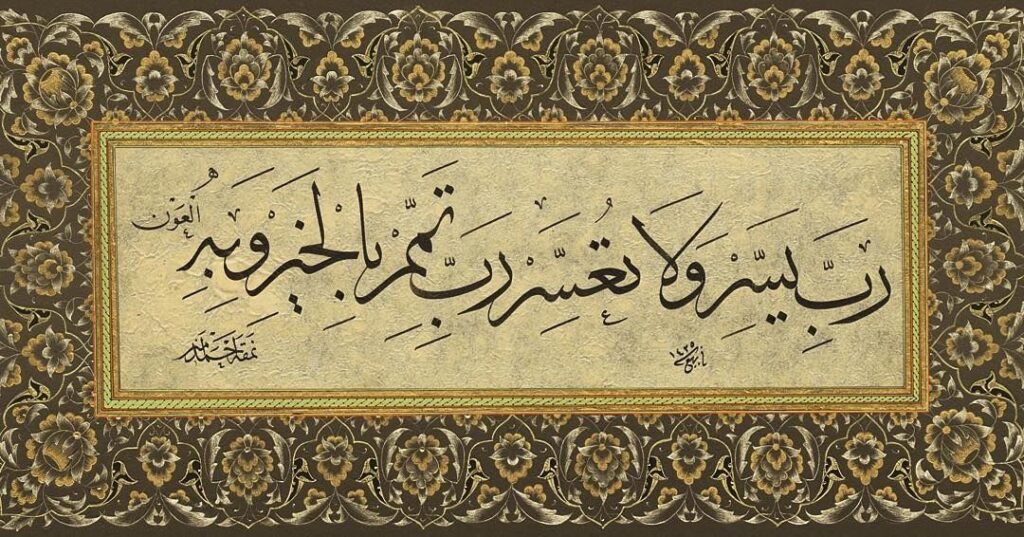
My favorite and the classic starting point: students traditionally begin with Thuluth, then move on to Naskh and the other scripts. Its letters follow the 1/3 and 2/3 rule. Known for elegant curves, elongated vertical strokes, and elaborate compositions, it is often found in mosque decoration and monumental inscriptions. This is the style I am studying with my teacher. Level: hard to write, lovely to admire.
2. Naskh (نسخ)
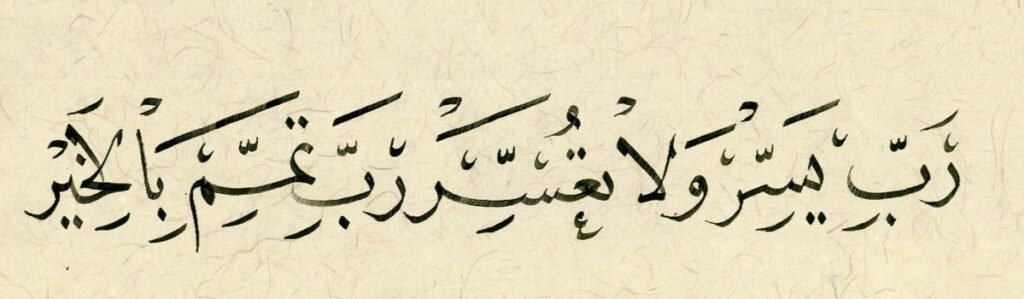
A clear and balanced style, widely used in manuscripts and for copying texts. Its letters are more compact and readable than Thuluth, and it remains influential in printed Arabic. Level: easy to read.
3. Riq’a (رقعة)
A practical, simple style for everyday handwriting, with compact letters and short strokes. It is designed for speed and is still familiar in daily Arabic handwriting. Level: easy, and great for relaxed canvas art.
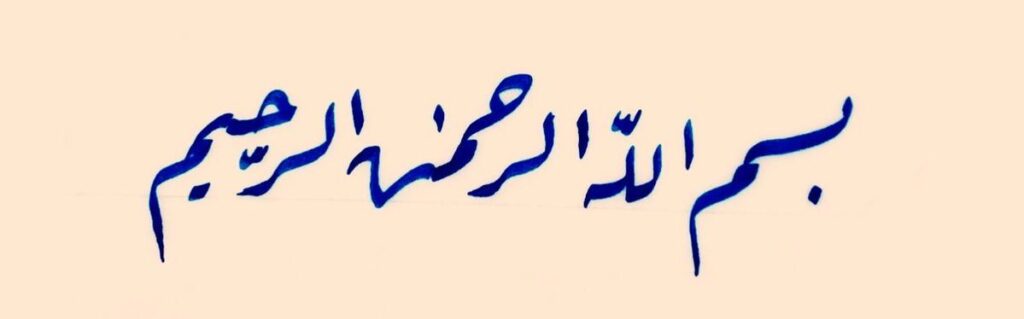
4. Kufic (كوفي)
One of the earliest major styles: strong, angular, and geometric. It was used in early Quran manuscripts and architectural decoration, and it inspires many modern graphic designs. Level: easy to trace, tricky to read.
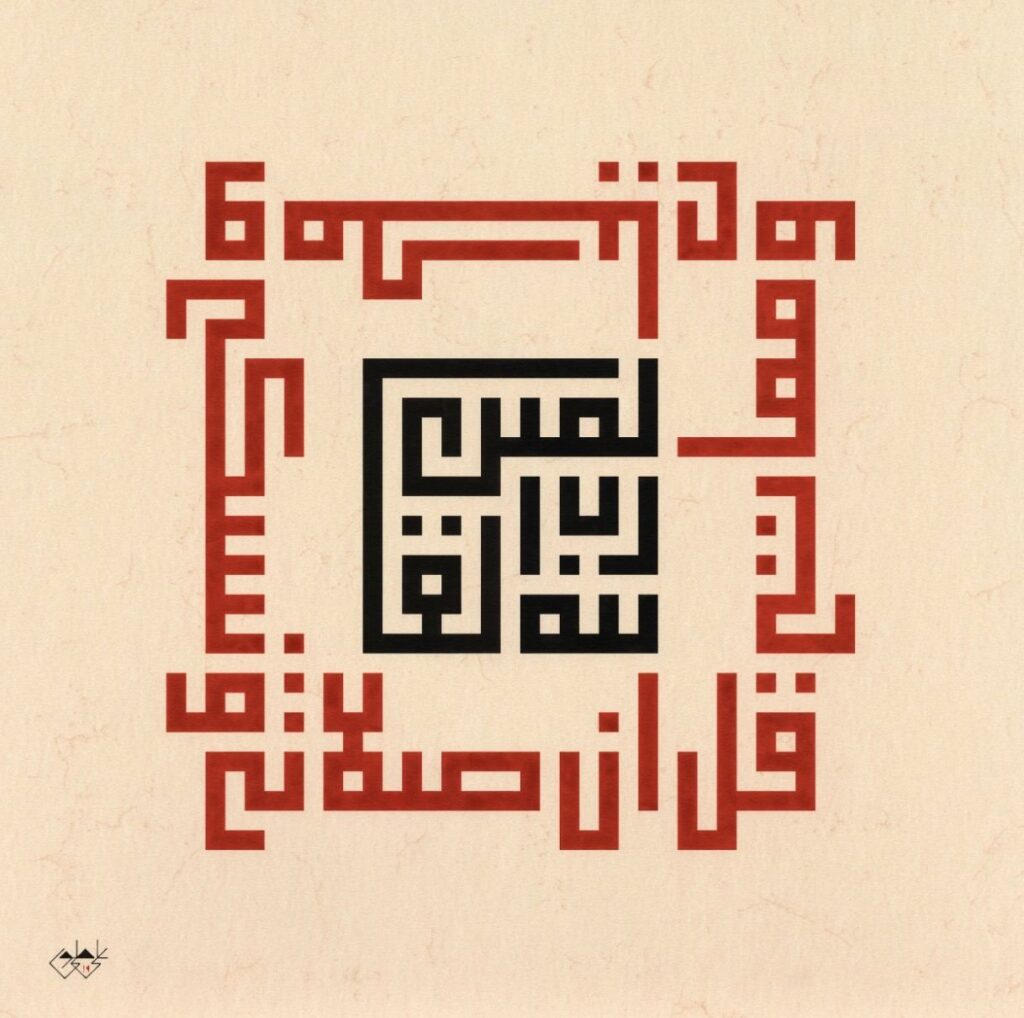
5. Diwani (ديواني)
Developed in the Ottoman world and closely associated with the Ottoman chancery. Its letters are flowing, closely connected, and often intertwined in decorative compositions. Level: hard to write and to read.
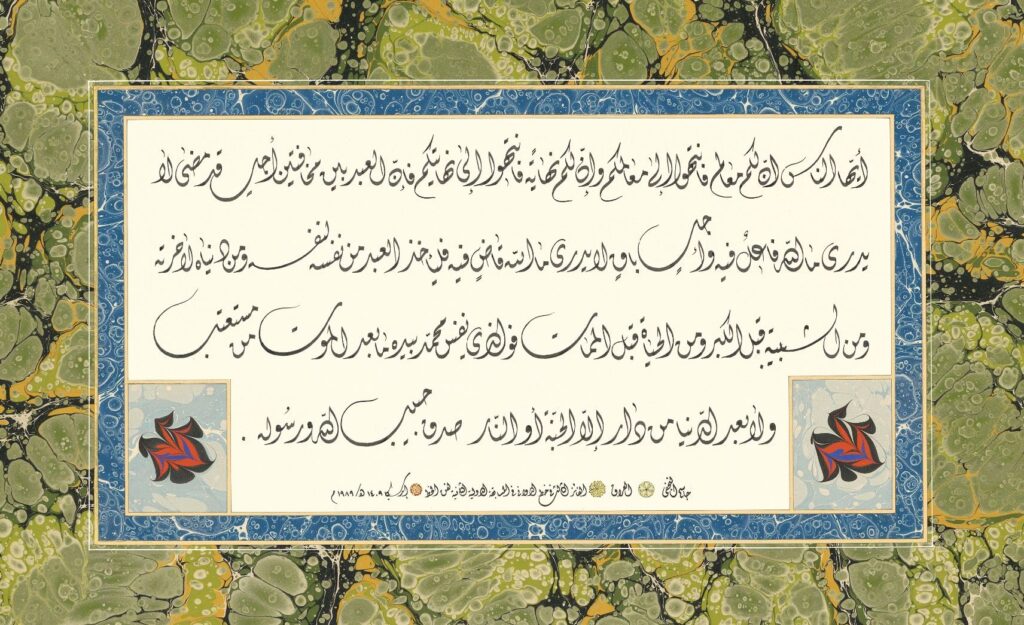
6. Ta’liq (تعليق)
A Persian style in the Arabic script tradition, known for flowing, sloping lines and a distinctive rhythm. It played an important role in Persian manuscripts and literary culture. Level: advanced.
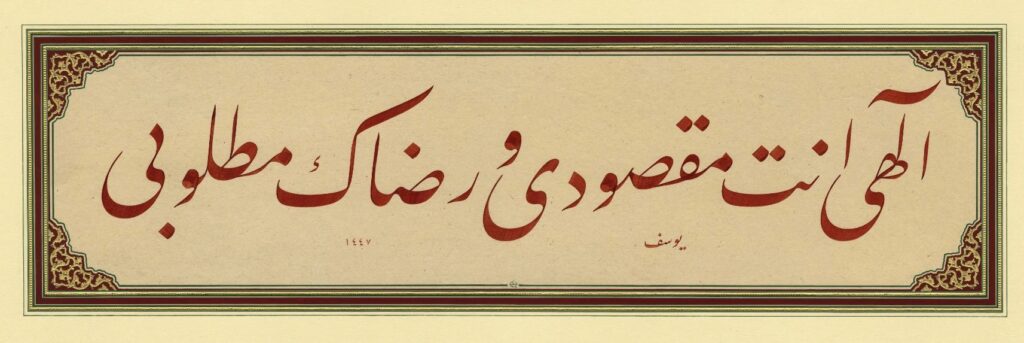
Which style first?
Students all around the world traditionally begin with Thuluth, then move on to Naskh and the other scripts. If you mainly want to read and write quickly, try Naskh or Riq’a. If you love geometric looks, try Kufic. Pick one script at a time.
6. Patterns, Wall Art, and Modern Looks
Calligraphy pairs beautifully with ornament. In the Ottoman tradition, this is called tezhip: gold leaf and fine floral or geometric borders that frame a word or a whole page. You can also place a word inside a circle, an arch or an octagon, using Islamic geometric patterns (girih). Gold or white lettering on a dark background makes dramatic Islamic calligraphy wall art. For a modern look, choose one word, lots of empty space, and two or three colors.
Many homes in Bangladesh and across South Asia display Arabic phrases with a translation underneath. So if you search for Islamic calligraphy art Bangla, adding the Bengali meaning is a lovely personal touch.
7. How to Read Arabic Calligraphy
Reading calligraphy can feel like decoding a secret message. Here is how I start:
- Arabic reads from right to left.
- Dots separate letters that look alike.
- Most letters connect, and their shape changes with their position in the word.
- Start with clear scripts like Naskh and Riq’a. Kufic and Diwani are harder at first.
- If you know the phrase, like Bismillah, compare it with the printed text.
It is perfectly fine to enjoy the beauty first and understand the words later.
8. How to write your name in Arabic calligraphy
Write it by its sound, not its English spelling, then ask someone who reads Arabic to check it. A calligraphy generator is fine for inspiration, but it can have wrong spelling or letters that do not connect. Always check before painting or printing.
9. Two Ways to Start: Classic or Modern?
Do you want to learn the classical art with a Qalam, or create modern calligraphy art for your wall?
| Part 1: Classic | Part 2: Modern | |
|---|---|---|
| Tools | Qalam, ink, special paper | Canvas, acrylic paint, brushes |
| Pace | Slow and meditative | Faster and forgiving |
| Best for | Learning the real script with a teacher | Home decor, gifts, creative evenings |
| Mistakes | Start again on a new line | Paint over them |
Scroll to the path that fits you, or read both. All the tools from both parts are on my Amazon list with all my calligraphy and painting supplies.
10. Part 1: Classic Arabic Calligraphy With Qalam, Ink, and Special Paper
This is the traditional way, and the one I am learning. It is slow, humbling, and very calming. Ask your teacher before you buy anything: teachers have strong opinions about pens and paper (and they are usually right).
Traditional tools – Starter Kit
- Qalam (قلم). The traditional pen, often cut from reed or bamboo. Its tip is cut at a certain angle and width, and that angle shapes every stroke. [Bamboo Qalam on Amazon]
- Qalam knife and cutting block. They prepare and re-cut the tip. In Turkish, they are called kalem tıraş and makta. [Qalam knife]
- Ink and inkwell. The ink must flow smoothly. Traditional ink is usually black and soot based. The best ink I’m using everyday is here. We use a little silk called lika in inkwells, which regulates how much ink the pen picks up.
- Ahar or matte coated paper. A traditional paper treatment that makes the surface smooth and keeps ink from spreading. For practice, any smooth paper that does not let the ink bleed is enough. I love to practice with matte coated paper. I also apply a little baby powder to the paper to make the surface smoother, so the qalam glides more easily. 🖌️
- A practice book. I use a Thuluth exercise book by Şevki Efendi. [download the Book for free here]. To study letter anatomy, proportions, and stroke order, I also recommend Arabic Calligraphy Mastery Series: THULUTH by Omar N. Uddin.
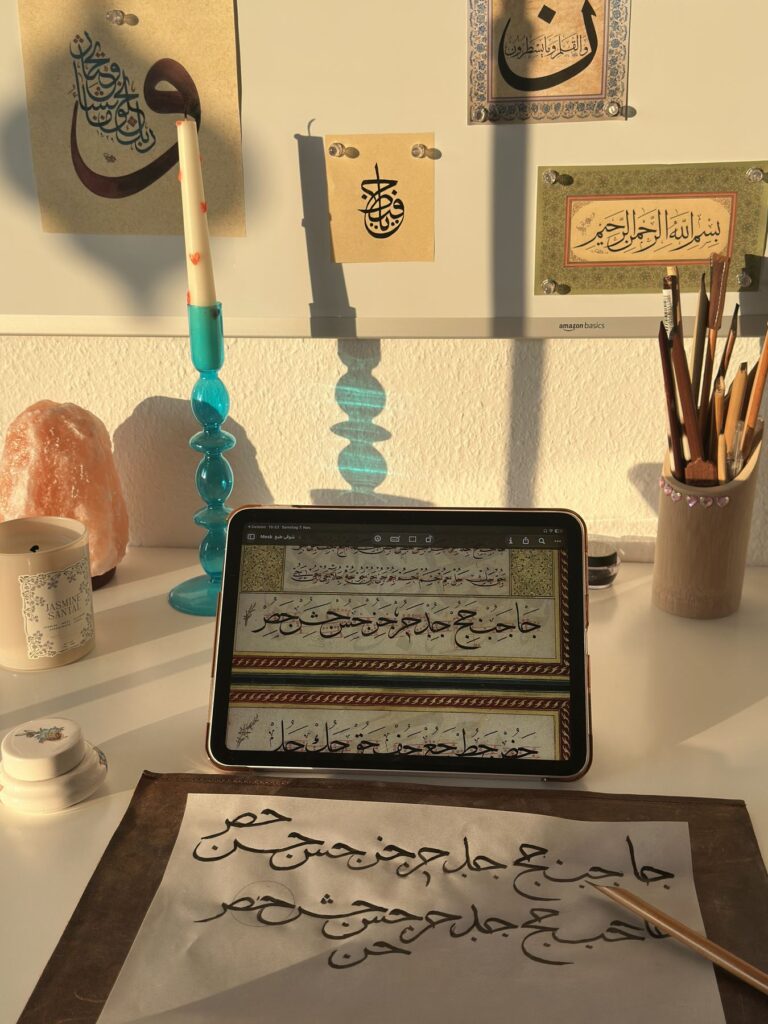
- A tablet for digital practice (optional, but highly recommended). One thing that has genuinely improved my calligraphy practice is using a tablet. I have Şevki Efendi’s workbook as a PDF on my tablet, which allows me to zoom in on individual letters, enlarge the models, and study their anatomy and proportions in detail. I can then practise directly alongside the enlarged examples. Personally, my results have improved significantly since I started working this way. I use this tablet for my digital practice.
You can have a look at the Arabic calligraphy set (Uthmani) or at this for Naskh practice.
How to start classic calligraphy
- Learn the alphabet. There are 28 letters, and each changes its form at the beginning, middle, or end of a word. (templates in section 12)
- Pick one script. Traditionally, students begin with Thuluth. Do not try five styles at once.
- Practise the Alif and the Nuqta. Learn how they work as references for proportion.
- Find a teacher. Even one lesson a month helps, because a teacher spots what you cannot see.
- Copy the master’s model. This is Meşk: copy, compare, correct, repeat.
- Practise a little every day. Fifteen minutes beat three hours once a month. And be patient.
Beginner tip
Start small. Practise one letter at a time, focus on proportions, and don’t rush.
11. Part 2: Modern Islamic Calligraphy Art
Now the second path. Modern Islamic calligraphy art on canvas is faster, more forgiving, and perfect if you want something beautiful on your wall tonight. You can trace a word, paint a soft background, and add lettering with a thin brush.
What you need
- A canvas. Start with a small or medium size, like 20×30 cm or 30×40 cm canvas.
- Acrylic paints. A small set with white, black, earth tones, and gold is enough. Acrylic dries fast and covers mistakes.
- A brush set and black carbon transfer paper for tracing your word onto the canvas.
How to paint it, step by step
- Choose one short word: Sabr (patience), Bismillah, Alhamdulillah, or Noor (light).
- Paint the background in thin layers and let it dry fully.
- Trace the word from a printed template with transfer paper.
- Paint the lettering with a thin brush, working from top to bottom.
- Fix mistakes with your background color, and let it dry for 24 hours.
Easy ideas: a minimal Sabr on a beige canvas, gold Alhamdulillah on black, or Bismillah over a soft watercolor wash. For 12 full ideas with backgrounds, read Islamic Calligraphy Painting: 12 Easy Ideas for Beginners to Try Tonight.
A note on respect
If you paint Quran verses or the names of Allah, hang the piece at a respectful height, and have the Arabic spelling checked by someone who reads Arabic before you start. One missing dot can change a word.
Curious what else I use and love? You can find everything on my Amazon wishlist.
12. Free Ways to Learn and 3 Free Templates
FREE WAYS TO LEARN
You do not need to spend money on day one:
- YouTube tutorials with traditional techniques and letter exercises
- Online calligraphy classes
- Museum collections with digitised manuscripts
Free resources are great for inspiration and extra practice, but they do not replace a teacher’s feedback, especially for traditional scripts.
3 TEMPLATES
I also prepared three free templates for you to download, print, and use:
Template 1: Arabic Alphabet Practice Sheet
Template 2: Nuqta and Alif Proportion Exercise
Template 3: Basic Letter Connection Practice
Take your time, repeat the shapes, and pay attention to the proportions.
13. What Thuluth Teaches Me
Studying Thuluth has taught me to look at letters differently. I no longer see written characters. I see proportions, the angle of each stroke, the curves, and the way the parts connect. Sometimes I spend a surprisingly long time looking at one single letter, trying to understand why a curve works.
My little calligraphy corner
Make practice convenient. Leave a pad of paper, your Qalam, and a small bottle of ink ready on a corner of your desk. When your tools are within reach, it is much easier to sit down, even for a few minutes.
14. Your Questions Answered – Q&A
What is the difference between Arabic and Islamic calligraphy?
Arabic calligraphy is the art of writing Arabic script. Islamic calligraphy is a broader term for calligraphic traditions of Islamic cultures.
Do I need to know Arabic to learn calligraphy?
No, I am proof. Arabic is not my mother tongue. But learning the alphabet and how letters connect helps a lot.
Which style should beginners learn first?
Traditionally, students begin with Thuluth, and it is my favorite. For quick reading and writing, Naskh and Riq’a are friendlier.
Can non-Muslims appreciate Islamic calligraphy?
Absolutely. Its beauty and history can be appreciated regardless of religion or background.
15. Why I Started This Blog
I wanted a place to document my journey into Islamic calligraphy: what I learn, my practice exercises, and the occasional struggles. In a way, this blog is my little digital diary. I want to look back one day and see how far I have come Inshallah.
16. Final Thoughts: One Letter at a Time
Calligraphy has taught me to slow down and appreciate details I might otherwise overlook. You do not need to master every style. You need one script, one pen, and a little patience. Start with one letter, one exercise, one small step.
Now it is your turn: which style are you most curious about? Tell me in the comments, download a template, and tag me on Instagram and Pinterest when you finish your piece. I would love to see it!